

Hosted by Dr. Jason Wong and Dr. Amol Mujoomdar via Zoom, this second meeting will take place on September 30, 2020 at 8:00 PM EST and include presentations from Interventional Radiologists from across Canada. Each presentation will be followed by a discussion (15 min/case).


CAIR MEMBERS

This event is offered at NO COST for CAIR members.  Please note that you need to log into your account first and select “Register for Events” link (left side menu) in the member dashboard to get the member rate. A separate registration to the Zoom platform will follow and you will receive an email with the meeting registration details.

CAIR NON-MEMBERS: $199.00 + tax

This fee includes all sessions for 2020.

To register, add item to cart and then proceed to check out. Follow instructions to fill out personal and payment information. A confirmation email will be sent once the payment is processed. A separate registration to the Zoom platform will follow and you will receive an email with the meeting registration details.


Hosted by Dr. Jason Wong and Dr. Amol Mujoomdar via Zoom, this second meeting will take place on September 30, 2020 at 8:00 PM EST and include presentations from Interventional Radiologists from across Canada. Each presentation will be followed by a discussion (15 min/case).

Document for Medtech Company Representative and Health Care Facilities

Our hospital, one of NYC's public hospitals and a level 1 trauma centre, was transformed. Normally empty stretchers lining the halls and back corridors of the ER soon overflowed with COVID-19 patients. The public health system quickly nearly tripled its existing ICU capacity.

This COVID pandemic has shown us how an organization can step up and give a remarkable display of innovation, collaboration, dedication, decision-making, service reconfiguration and workforce re-design.

The strength of CAIR is in our members, and it is through membership and engaged members that CAIR is able to advance our profession.

Due to the global COVID-19 pandemic and difficulty with in-person meetings, the Canadian Association for Interventional Radiology (CAIR) is introducing a new initiative, the Virtual Angio Club (CAIR VAC).

Here at CAIR, we have a commitment to equality and justice for all, zero tolerance for racism, bigotry and hate of any kind.

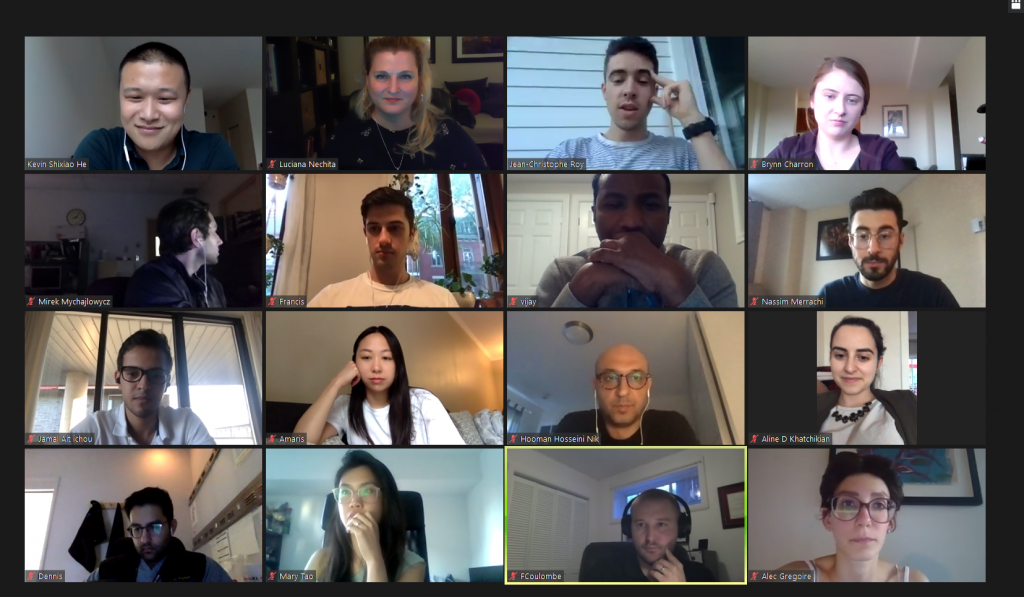
Led by Dr. Kevin Shixiao He, resident representative on the CAIR Board and inaugural Chair of the RFS, the new section had its first meeting in June with more than a dozen of representatives, and will soon be present in all of the 16 radiology residency programs across Canada.

I look forward to connecting with you and working together to further strengthen and CAIR for an amazing community of interventional radiology professionals.

Please only complete this survey if you are IR physicians (consultants only please, no medical students, residents, or fellows)
In response to the COVID-19 pandemic, hospitals and surgical facilities nationwide paused elective surgical procedures and other non-emergent and non-essential services, limiting physical access to health care facilities for non-essential health care personnel, patient visitors, and medical technology representatives.

Medtech Canada (the association representing the medical technology industry in Canada) developed the following Re-entry Guidance document (link below), which provides clinically based recommendations to support health care organizations and medical technology representatives when resuming elective procedures.

The principles and considerations contained in the document are intended to guide health care facilities, health care personnel and medical technology representatives as they adopt access policies that support safe re-entry of medical technology representatives into the health care facility. These considerations are not a substitute for guidance or requirements from provincial or federal government authorities.

Medtech Canada will be disseminating the document to its relevant stakeholders through the association’s various committees, and they sought endorsements from medical groups to support the document. 

CAIR is pleased to support this guidance document, as it will assist in ensuring that industry representatives can continue to support clinicians in a safe and responsive way.

Re-entry Guidance for Health Care Facilities and Medical Technology Representatives

If you have any questions about the Re-entry Guidance, please contact Medtech Canada’s President and CEO, Brian Lewis at blewis@medtechcanada.org.


Hosted by Dr. Jason Wong and Dr. Amol Mujoomdar via Zoom, this second meeting will take place on September 30, 2020 at 8:00 PM EST and include presentations from Interventional Radiologists from across Canada. Each presentation will be followed by a discussion (15 min/case).

Document for Medtech Company Representative and Health Care Facilities

Our hospital, one of NYC's public hospitals and a level 1 trauma centre, was transformed. Normally empty stretchers lining the halls and back corridors of the ER soon overflowed with COVID-19 patients. The public health system quickly nearly tripled its existing ICU capacity.

This COVID pandemic has shown us how an organization can step up and give a remarkable display of innovation, collaboration, dedication, decision-making, service reconfiguration and workforce re-design.

The strength of CAIR is in our members, and it is through membership and engaged members that CAIR is able to advance our profession.

Due to the global COVID-19 pandemic and difficulty with in-person meetings, the Canadian Association for Interventional Radiology (CAIR) is introducing a new initiative, the Virtual Angio Club (CAIR VAC).

Here at CAIR, we have a commitment to equality and justice for all, zero tolerance for racism, bigotry and hate of any kind.

Led by Dr. Kevin Shixiao He, resident representative on the CAIR Board and inaugural Chair of the RFS, the new section had its first meeting in June with more than a dozen of representatives, and will soon be present in all of the 16 radiology residency programs across Canada.

I look forward to connecting with you and working together to further strengthen and CAIR for an amazing community of interventional radiology professionals.

Please only complete this survey if you are IR physicians (consultants only please, no medical students, residents, or fellows)

It was a Saturday in mid March. I sat down in the back of the IR control room, and I began dictating chest radiographs from the ER. The first one demonstrated subtle hazy peripheral opacities. It was not garden variety bacterial pneumonia. I called the ER attending, “I am concerned this is COVID-19.” The next chest radiograph showed peripheral, ill-defined, bilateral airspace opacities. I called the ER

 attending again. One after the other, I began to feel like a broken record with my dictations, and phone calls. On CTs of the abdomen and pelvis performed to rule out nephrolithiasis, diverticulitis, etc… I was seeing bilateral, peripheral, ground glass opacities in patients who were otherwise asymptomatic from a respiratory perspective. I picked up the phone again: “No stone, no diverticulitis, but I’m worried they have COVID-19.”

Prior to this, we had seen probably fewer than five suspicious cases at my hospital. On Monday, I followed up the COVID testing for those patients. They were all positive. The floodgates had opened, and COVID-19 came charging through.

Our hospital, one of NYC’s public hospitals and a level 1 trauma centre, was transformed. Normally empty stretchers lining the halls and back corridors of the ER soon overflowed with COVID-19 patients. The public health system quickly nearly tripled its existing ICU capacity. US Army doctors, nurses, and physician assistants answered the call of duty, and helped support us through this crisis by helping staff some of the new ICUs. Elective surgeries were postponed. We postponed doing elective IR cases.

In March, prior to the surge, my partner and I would go to the ICU and place central venous catheters and arterial lines on patients to help ease the burden on the ICU staff. With a program of four radiology residents per year, one resident was assigned to night float, and four covered various rotations simultaneously.
(more…)

Hosted by Dr. Jason Wong and Dr. Amol Mujoomdar via Zoom, this second meeting will take place on September 30, 2020 at 8:00 PM EST and include presentations from Interventional Radiologists from across Canada. Each presentation will be followed by a discussion (15 min/case).

Document for Medtech Company Representative and Health Care Facilities

Our hospital, one of NYC's public hospitals and a level 1 trauma centre, was transformed. Normally empty stretchers lining the halls and back corridors of the ER soon overflowed with COVID-19 patients. The public health system quickly nearly tripled its existing ICU capacity.

This COVID pandemic has shown us how an organization can step up and give a remarkable display of innovation, collaboration, dedication, decision-making, service reconfiguration and workforce re-design.

The strength of CAIR is in our members, and it is through membership and engaged members that CAIR is able to advance our profession.

Due to the global COVID-19 pandemic and difficulty with in-person meetings, the Canadian Association for Interventional Radiology (CAIR) is introducing a new initiative, the Virtual Angio Club (CAIR VAC).

Here at CAIR, we have a commitment to equality and justice for all, zero tolerance for racism, bigotry and hate of any kind.

Led by Dr. Kevin Shixiao He, resident representative on the CAIR Board and inaugural Chair of the RFS, the new section had its first meeting in June with more than a dozen of representatives, and will soon be present in all of the 16 radiology residency programs across Canada.

I look forward to connecting with you and working together to further strengthen and CAIR for an amazing community of interventional radiology professionals.

Please only complete this survey if you are IR physicians (consultants only please, no medical students, residents, or fellows)

With an ordinary beginning to the year, little did I suspect a virus pandemic and a near future bleak reality awaiting. The earliest cases detected in the UK were in late January. Despite not belonging to any vulnerable group at that time, exaggerated media reports of young individuals rapidly deteriorating, requiring ventilator support and some even dying did cause fear in our minds. Unsurprisingly, crowding being the most common risk factor for spread, London soon saw exponential growth in its COVID-19 cases. Simple public health measures like frequent hand sanitising and avoiding frequent touching of the face failed to reduce the virus spread, and the increasing case load led to full blown lockdown in late March. The parliament of the UK granted the government emergency powers to handle the pandemic and police were empowered to enforce lockdown. Fear of disaster and supply shortage led to panic buying. The situation slowly started improving in May and the government is looking at gradually relaxing lockdown measures.

Major and drastic changes were made in the NHS. The health trust I work in is one of the five most affected trusts in the whole of UK. Diagnostic radiologists started working from home exclusively, including attending multidisciplinary meetings via online conferencing softwares. Interventional radiology services fell overnight to an emergency-only service. An experienced radiologist colleague was designated the Radiology COVID lead who collaborated with the other departments and hospital management to bring about necessary changes in Radiology to meet the demands of this pandemic. Vetting of planned cases and categorization into various classes of urgency and severity ensued. (more…)

Hosted by Dr. Jason Wong and Dr. Amol Mujoomdar via Zoom, this second meeting will take place on September 30, 2020 at 8:00 PM EST and include presentations from Interventional Radiologists from across Canada. Each presentation will be followed by a discussion (15 min/case).

Document for Medtech Company Representative and Health Care Facilities

Our hospital, one of NYC's public hospitals and a level 1 trauma centre, was transformed. Normally empty stretchers lining the halls and back corridors of the ER soon overflowed with COVID-19 patients. The public health system quickly nearly tripled its existing ICU capacity.

This COVID pandemic has shown us how an organization can step up and give a remarkable display of innovation, collaboration, dedication, decision-making, service reconfiguration and workforce re-design.

The strength of CAIR is in our members, and it is through membership and engaged members that CAIR is able to advance our profession.

Due to the global COVID-19 pandemic and difficulty with in-person meetings, the Canadian Association for Interventional Radiology (CAIR) is introducing a new initiative, the Virtual Angio Club (CAIR VAC).

Here at CAIR, we have a commitment to equality and justice for all, zero tolerance for racism, bigotry and hate of any kind.

Led by Dr. Kevin Shixiao He, resident representative on the CAIR Board and inaugural Chair of the RFS, the new section had its first meeting in June with more than a dozen of representatives, and will soon be present in all of the 16 radiology residency programs across Canada.

I look forward to connecting with you and working together to further strengthen and CAIR for an amazing community of interventional radiology professionals.

Please only complete this survey if you are IR physicians (consultants only please, no medical students, residents, or fellows)

Dear members,

Looking back at 2019 it is, in some ways, like looking back on a different world. It was a world where CAIR brought together, face-to-face, so many IR professionals for important moments like the Annual Meeting, where we could sit down next to each other and where we could present, listen, and engage in real life. 

We made the difficult decision to cancel our 2020 event, but we continue to be grateful for the ongoing support and professionalism of our community of healthcare professionals, members, corporate partners, and other stakeholders.

As we look ahead, we realize that, though our methods of delivery may be different, our goals are still very much the same: providing value to our members by moving forward our scientific and educational offerings in a world where the COVID-19 pandemic continues to pose professional and personal demands to the IR community.

We must forge ahead with the important work of promoting IR and minimally invasive procedures to patients, patient advocacy groups, other health care professionals, and policy makers as part of the CAIR initiative.  New initiatives are underway: we have started a new Virtual Angio Club and a brand-new Residents, Fellows, and Students Section!

We also must face other realities. Over the past few weeks, we’ve been listening to the conversations taking place internally and worldwide on the topic of racial inequities experienced by Black people and their communities. The widespread protests against racial injustice and anti-Black violence have also showed us being at a crossroads for democracy and human rights not only south of the border but also here in Canada.

Around the world, health care organizations are declaring anti-Black racism a public health crisis. Here at CAIR, we have a commitment to equality and justice for all, zero tolerance for racism, bigotry and hate of any kind. Racism exists everywhere, including Canadian healthcare, and as health care professionals, we must commit to challenge it whenever we see it and strive to provide the highest attainable standard of healthcare as one of the fundamental rights of every human being. In addition, we must proclaim: Black Lives Matter.

More than ever, we now have a shared sense of purpose and commitment where health care professionals are compassionate and collaborative.

We have built a great team. In April, we welcomed Luciana Nechita as CAIR’s Executive Director. Under her leadership and along with the CAIR board, we’re looking forward to strengthening our vision to bring together the IR community and work with patient groups and other allies to help increase accessibility for Canadians to patient friendly, effective, minimally invasive, image guided treatments.

The strength of CAIR is in our members, and it is through membership and engaged members that CAIR is able to advance our profession.

2020, is it over yet?  Despite our new challenges, I look forward to our mission and to listening and working with you!

Take CAIR,

Amol Mujoomdar

Hosted by Dr. Jason Wong and Dr. Amol Mujoomdar via Zoom, this second meeting will take place on September 30, 2020 at 8:00 PM EST and include presentations from Interventional Radiologists from across Canada. Each presentation will be followed by a discussion (15 min/case).

Document for Medtech Company Representative and Health Care Facilities

Our hospital, one of NYC's public hospitals and a level 1 trauma centre, was transformed. Normally empty stretchers lining the halls and back corridors of the ER soon overflowed with COVID-19 patients. The public health system quickly nearly tripled its existing ICU capacity.

This COVID pandemic has shown us how an organization can step up and give a remarkable display of innovation, collaboration, dedication, decision-making, service reconfiguration and workforce re-design.

The strength of CAIR is in our members, and it is through membership and engaged members that CAIR is able to advance our profession.

Due to the global COVID-19 pandemic and difficulty with in-person meetings, the Canadian Association for Interventional Radiology (CAIR) is introducing a new initiative, the Virtual Angio Club (CAIR VAC).

Here at CAIR, we have a commitment to equality and justice for all, zero tolerance for racism, bigotry and hate of any kind.

Led by Dr. Kevin Shixiao He, resident representative on the CAIR Board and inaugural Chair of the RFS, the new section had its first meeting in June with more than a dozen of representatives, and will soon be present in all of the 16 radiology residency programs across Canada.

I look forward to connecting with you and working together to further strengthen and CAIR for an amazing community of interventional radiology professionals.

Please only complete this survey if you are IR physicians (consultants only please, no medical students, residents, or fellows)

Due to the global COVID-19 pandemic and difficulty with in-person meetings, the Canadian Association for Interventional Radiology (CAIR) is introducing a new initiative, the Virtual Angio Club (CAIR VAC).

Hosted by Dr. Jason Wong and Dr. Amol Mujoomdar via Zoom, this first inaugural meeting will take place on June 23, 2020 at 8:00 PM EST and include six Interventional Radiologists from across Canada. Each presentation will be followed by a discussion (15 min/case).

Speakers

Dr. Rob Berry, Halifax
Dr. John Chung, Vancouver
Dr. Patrick Gilbert, Montreal
Dr. Adnan Hadziomerovic, Ottawa
Dr. Amol Mujoomdar, London
Dr. Jason Wong, Calgary

This event is offered at no cost for all CAIR members!

Non-members: $199/year* (*complimentary access/no charge for the June meeting)

Limited space available, register now!

Hosted by Dr. Jason Wong and Dr. Amol Mujoomdar via Zoom, this second meeting will take place on September 30, 2020 at 8:00 PM EST and include presentations from Interventional Radiologists from across Canada. Each presentation will be followed by a discussion (15 min/case).

Document for Medtech Company Representative and Health Care Facilities

Our hospital, one of NYC's public hospitals and a level 1 trauma centre, was transformed. Normally empty stretchers lining the halls and back corridors of the ER soon overflowed with COVID-19 patients. The public health system quickly nearly tripled its existing ICU capacity.

This COVID pandemic has shown us how an organization can step up and give a remarkable display of innovation, collaboration, dedication, decision-making, service reconfiguration and workforce re-design.

The strength of CAIR is in our members, and it is through membership and engaged members that CAIR is able to advance our profession.

Due to the global COVID-19 pandemic and difficulty with in-person meetings, the Canadian Association for Interventional Radiology (CAIR) is introducing a new initiative, the Virtual Angio Club (CAIR VAC).

Here at CAIR, we have a commitment to equality and justice for all, zero tolerance for racism, bigotry and hate of any kind.

Led by Dr. Kevin Shixiao He, resident representative on the CAIR Board and inaugural Chair of the RFS, the new section had its first meeting in June with more than a dozen of representatives, and will soon be present in all of the 16 radiology residency programs across Canada.

I look forward to connecting with you and working together to further strengthen and CAIR for an amazing community of interventional radiology professionals.

Please only complete this survey if you are IR physicians (consultants only please, no medical students, residents, or fellows)

We’re here to ​ listen, ​ learn, and​  take action. ​

The events taking place throughout the United States and Canada for these past few weeks have been difficult and painful and the conversations that follow in these times are necessary.

Here at CAIR, we have a commitment to equality and justice for all, zero tolerance for racism, bigotry and hate of any kind.

Racism exists everywhere, including Canadian healthcare, and as health care professionals, we must commit to challenge it whenever we see it and strive to provide the highest attainable standard of healthcare as one of the fundamental rights of every human being without distinction of race, religion, political belief, economic or social condition.

CAIR Board of Directors

Hosted by Dr. Jason Wong and Dr. Amol Mujoomdar via Zoom, this second meeting will take place on September 30, 2020 at 8:00 PM EST and include presentations from Interventional Radiologists from across Canada. Each presentation will be followed by a discussion (15 min/case).

Document for Medtech Company Representative and Health Care Facilities

Our hospital, one of NYC's public hospitals and a level 1 trauma centre, was transformed. Normally empty stretchers lining the halls and back corridors of the ER soon overflowed with COVID-19 patients. The public health system quickly nearly tripled its existing ICU capacity.

This COVID pandemic has shown us how an organization can step up and give a remarkable display of innovation, collaboration, dedication, decision-making, service reconfiguration and workforce re-design.

The strength of CAIR is in our members, and it is through membership and engaged members that CAIR is able to advance our profession.

Due to the global COVID-19 pandemic and difficulty with in-person meetings, the Canadian Association for Interventional Radiology (CAIR) is introducing a new initiative, the Virtual Angio Club (CAIR VAC).

Here at CAIR, we have a commitment to equality and justice for all, zero tolerance for racism, bigotry and hate of any kind.

Led by Dr. Kevin Shixiao He, resident representative on the CAIR Board and inaugural Chair of the RFS, the new section had its first meeting in June with more than a dozen of representatives, and will soon be present in all of the 16 radiology residency programs across Canada.

I look forward to connecting with you and working together to further strengthen and CAIR for an amazing community of interventional radiology professionals.

Please only complete this survey if you are IR physicians (consultants only please, no medical students, residents, or fellows)

Led by Dr. Kevin Shixiao He, resident representative on the CAIR Board and inaugural Chair of the RFS, the new section had its first meeting in June with more than a dozen of representatives, and will soon be present in all of the 16 radiology residency programs across Canada. The main goal of the RFS is to be a strong voice of IR and CAIR locally at the trainees’ level. Among other exciting projects, it will work closely with medical students groups to host the IR Discovery Cocktails series, a CAIR initiative aimed at attracting the best minds of the next generation of physicians to the sub-specialty of IR.

Hosted by Dr. Jason Wong and Dr. Amol Mujoomdar via Zoom, this second meeting will take place on September 30, 2020 at 8:00 PM EST and include presentations from Interventional Radiologists from across Canada. Each presentation will be followed by a discussion (15 min/case).

Document for Medtech Company Representative and Health Care Facilities

Our hospital, one of NYC's public hospitals and a level 1 trauma centre, was transformed. Normally empty stretchers lining the halls and back corridors of the ER soon overflowed with COVID-19 patients. The public health system quickly nearly tripled its existing ICU capacity.

This COVID pandemic has shown us how an organization can step up and give a remarkable display of innovation, collaboration, dedication, decision-making, service reconfiguration and workforce re-design.

The strength of CAIR is in our members, and it is through membership and engaged members that CAIR is able to advance our profession.

Due to the global COVID-19 pandemic and difficulty with in-person meetings, the Canadian Association for Interventional Radiology (CAIR) is introducing a new initiative, the Virtual Angio Club (CAIR VAC).

Here at CAIR, we have a commitment to equality and justice for all, zero tolerance for racism, bigotry and hate of any kind.

Led by Dr. Kevin Shixiao He, resident representative on the CAIR Board and inaugural Chair of the RFS, the new section had its first meeting in June with more than a dozen of representatives, and will soon be present in all of the 16 radiology residency programs across Canada.

I look forward to connecting with you and working together to further strengthen and CAIR for an amazing community of interventional radiology professionals.

Please only complete this survey if you are IR physicians (consultants only please, no medical students, residents, or fellows)

Dear members of the Canadian Association for Interventional Radiology,

I wanted to take a moment to introduce myself. I am Luciana Nechita, and for a month now, the new Executive Director here at the Canadian Association for Interventional Radiology (CAIR).

Global health care systems are facing the unprecedented challenges of COVID-19 and interventional radiologists play a very important role in responding to this challenge while continuing to deliver high quality healthcare to Canadians from coast to coast.

I’m incredibly humbled and honored to have the opportunity to advance CAIR’s mission and work with our members, allies, partners, and other stakeholders to help increase accessibility for Canadians to patient friendly, effective, minimally invasive, image guided treatments.

Throughout my career I have always asked questions. And long before I was aware of Simon Sinek, I asked ‘Why?’ Why does your organization exist? Why do you get out of bed in the morning? Why should anyone care? This ‘why’ is a game changer- if you know the ‘why’, you will figure out the ‘what’ and the ‘how’.

Here’s my why: interventional radiology saves lives. And while it’s true that it drives medical innovation that improves public health, it is also largely untapped by many Canadians. It is of utmost importance to raise patient awareness surrounding minimally invasive treatment alternatives, and CAIR’s mission is to do just that: making these treatment options available to millions of Canadians.

For me, this mission is an exciting way to take my skills, international knowledge and expertise working in both for profit and nonprofit organizations and to transfer that into the health care sector. There are many opportunities to learn new things, influence decision makers and help the interventional radiology reach its full potential.

My vision is to build this organization by continuing to increase the value it delivers to the members and stakeholders, and

  • transform CAIR into a knowledge hub for interventional radiology in Canada where IR professionals will connect with colleagues and experts, share insights and best practices, learn from experiences and inspire innovation and new ways of working,
  • become strong voice that represents the interventional radiology’s interests with different levels of government,
  • promote an ongoing awareness about the benefits of minimally invasive interventional radiology treatments with patient groups, healthcare professionals, decision makers, and the general public.

I believe in embracing learning as an instrument of change, but I also believe that, as Antoine de Saint-Exupéry said, “A goal without a plan is just a wish”.

I am lucky to be joining a small but mighty team and have the support of an inspiring board of directors. I am excited to get to know the members, our partners and stakeholders, and explore the challenges that can make a true, profound difference.

I look forward to connecting with you and working together to further strengthen and CAIR for an amazing community of interventional radiology professionals.

Luciana Nechita

Hosted by Dr. Jason Wong and Dr. Amol Mujoomdar via Zoom, this second meeting will take place on September 30, 2020 at 8:00 PM EST and include presentations from Interventional Radiologists from across Canada. Each presentation will be followed by a discussion (15 min/case).

Document for Medtech Company Representative and Health Care Facilities

Our hospital, one of NYC's public hospitals and a level 1 trauma centre, was transformed. Normally empty stretchers lining the halls and back corridors of the ER soon overflowed with COVID-19 patients. The public health system quickly nearly tripled its existing ICU capacity.

This COVID pandemic has shown us how an organization can step up and give a remarkable display of innovation, collaboration, dedication, decision-making, service reconfiguration and workforce re-design.

The strength of CAIR is in our members, and it is through membership and engaged members that CAIR is able to advance our profession.

Due to the global COVID-19 pandemic and difficulty with in-person meetings, the Canadian Association for Interventional Radiology (CAIR) is introducing a new initiative, the Virtual Angio Club (CAIR VAC).

Here at CAIR, we have a commitment to equality and justice for all, zero tolerance for racism, bigotry and hate of any kind.

Led by Dr. Kevin Shixiao He, resident representative on the CAIR Board and inaugural Chair of the RFS, the new section had its first meeting in June with more than a dozen of representatives, and will soon be present in all of the 16 radiology residency programs across Canada.

I look forward to connecting with you and working together to further strengthen and CAIR for an amazing community of interventional radiology professionals.

Please only complete this survey if you are IR physicians (consultants only please, no medical students, residents, or fellows)

Please only complete this survey if you are IR physicians (consultants only please, no medical students, residents, or fellows)

Jesus Beltran-Perez, radiology resident at Tulane Medical Center, New Orleans, Louisiana, USA is kindly inviting you to participate in a brief, anonymous opinion survey that he is conducting around the world on the topic: “Internship year in General Surgery prior to training in Interventional Radiology”. The goal of this survey is to evaluate how IR’s value surgical training, as part of their training and practice in interventional radiology.

For more information, please feel free to reach out to jbeltranperez@tulane.edu|+12104281254

Hosted by Dr. Jason Wong and Dr. Amol Mujoomdar via Zoom, this second meeting will take place on September 30, 2020 at 8:00 PM EST and include presentations from Interventional Radiologists from across Canada. Each presentation will be followed by a discussion (15 min/case).

Document for Medtech Company Representative and Health Care Facilities

Our hospital, one of NYC's public hospitals and a level 1 trauma centre, was transformed. Normally empty stretchers lining the halls and back corridors of the ER soon overflowed with COVID-19 patients. The public health system quickly nearly tripled its existing ICU capacity.

This COVID pandemic has shown us how an organization can step up and give a remarkable display of innovation, collaboration, dedication, decision-making, service reconfiguration and workforce re-design.

The strength of CAIR is in our members, and it is through membership and engaged members that CAIR is able to advance our profession.

Due to the global COVID-19 pandemic and difficulty with in-person meetings, the Canadian Association for Interventional Radiology (CAIR) is introducing a new initiative, the Virtual Angio Club (CAIR VAC).

Here at CAIR, we have a commitment to equality and justice for all, zero tolerance for racism, bigotry and hate of any kind.

Led by Dr. Kevin Shixiao He, resident representative on the CAIR Board and inaugural Chair of the RFS, the new section had its first meeting in June with more than a dozen of representatives, and will soon be present in all of the 16 radiology residency programs across Canada.

I look forward to connecting with you and working together to further strengthen and CAIR for an amazing community of interventional radiology professionals.

Please only complete this survey if you are IR physicians (consultants only please, no medical students, residents, or fellows)